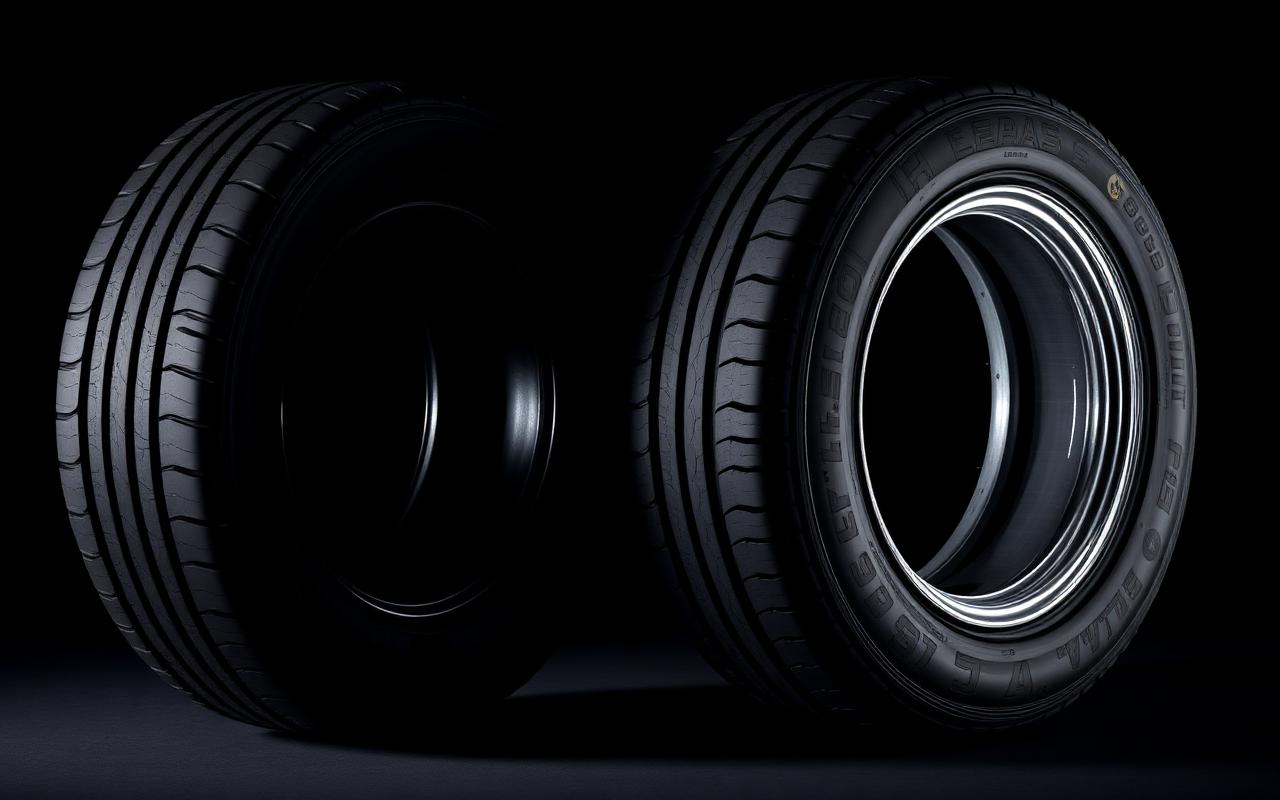
Side-by-side comparison
Ride comfort
Standards win significantly. Run-flat sidewalls are 4–5x thicker and barely flex, transmitting road imperfections directly into the cabin. On London's rougher surfaces (especially around Hackney, Lambeth and most A-roads), the difference is immediately noticeable.
Handling
Marginal edge to run-flats in dry conditions due to stiffer sidewall response. Standards have a slight wet-grip advantage thanks to softer rubber compounds being possible. For 99% of drivers, the handling difference is imperceptible.
Mileage and wear
Standards typically last 20–30% longer. Run-flat sidewalls generate more heat, and heat shortens tread life. Expect 25,000–35,000 miles from a premium standard tyre vs 18,000–28,000 from an equivalent run-flat.
Puncture handling
Run-flats let you drive 50 miles at 50 mph. Standards leave you stranded — you need a spare wheel or a mobility kit. For London drivers who could call a mobile fitter within 30 minutes, this gap matters less.
Cost
Run-flats cost 30–50% more per tyre. On a set of 4 premium 18-inch tyres, that's £400–£600 of difference. Over a 4-year ownership the cost gap can exceed £1,000.
Repairability
Standards: about 60% of punctures repairable under BS AU 159. Run-flats: almost never repairable once driven flat.
Weight and economy
Standards are 1.5–2.5 kg lighter per wheel. Over four wheels that's 6–10 kg of unsprung mass — small but measurable improvement in ride and fuel economy (~1–2% MPG).
Switching from run-flats to standards
Allowed in the UK with conditions:
- All four tyres must be switched together — never mix run-flats and standards on the same axle.
- Carry a mobility kit (sealant + compressor) or fit a space-saver spare wheel.
- Tell your insurer. Most won't change your premium; some will note the modification. Failing to notify is a coverage risk.
- Keep the OE run-flats if you might sell the car later — buyers expect them on certain marques.
Switching from standards to run-flats
Less common, but legal. Check:
- Your wheels are rated for run-flat fitment (most modern alloys are, but some aftermarket rims aren't).
- Your TPMS works — run-flats without functional TPMS defeat the purpose.
- You can absorb the cost increase and the ride change.
Insurance implications
Notifying your insurer of a tyre-type change is required under the 'duty of disclosure'. Most insurers treat it as a no-impact modification — but some will load the premium by £10–£30 a year, especially on younger drivers or higher-performance cars. Always ask before changing.
Which should you choose?
Practical decision matrix:
- City driver, calls mobile fitters when needed, hates harsh ride → standards.
- Long-distance commuter, motorway 200+ miles a week, no spare wheel comfort → run-flats.
- Performance driver who wants sidewall response → run-flats.
- Cost-conscious, replaces tyres often → standards.
- Drives 20+ miles from home regularly with kids in car → run-flats (peace of mind).
Need a tyre fixed right now?
Mobile fitter to your London location in under 35 minutes.