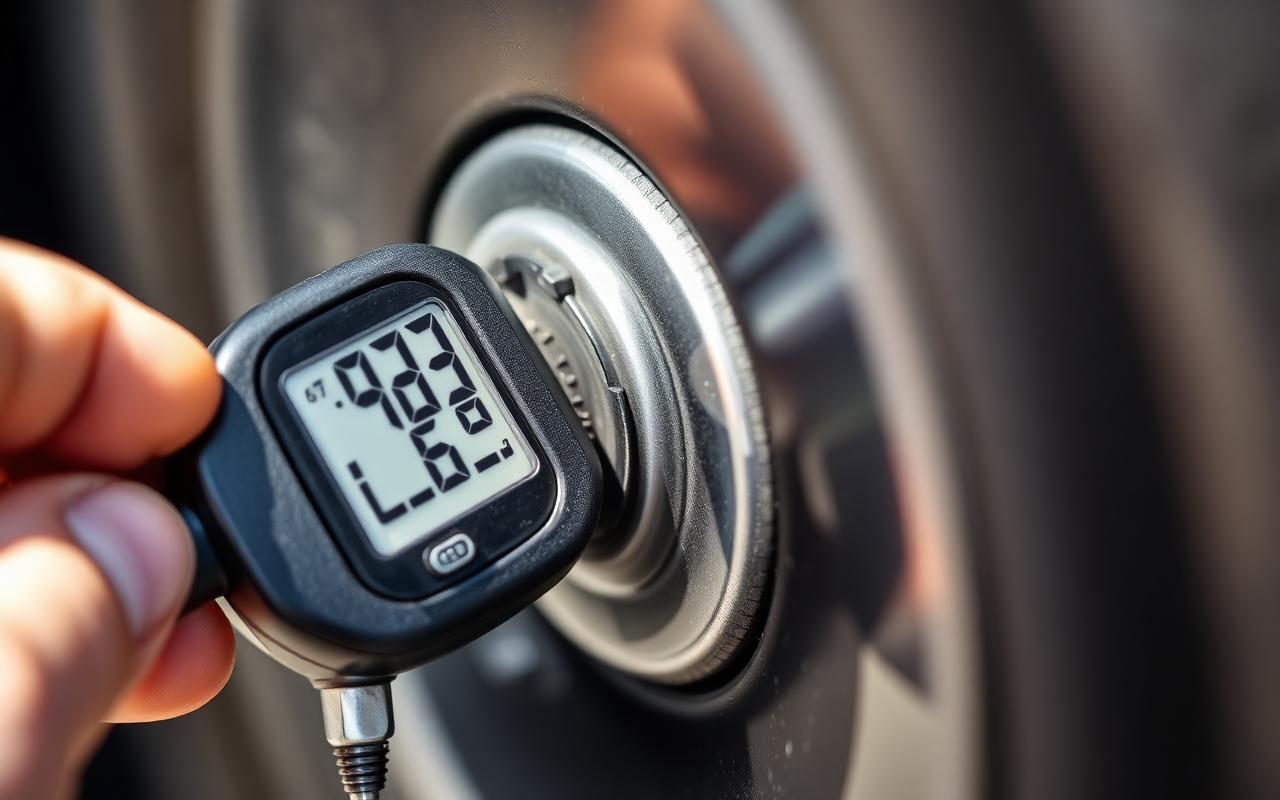
Where to find your car's correct pressure
Three reliable sources, in order:
- 1The sticker inside the driver's door jamb (the most accurate for your specific car).
- 2Inside the fuel filler flap (some manufacturers put it here instead).
- 3The owner's manual.
DO NOT use the maximum pressure printed on the tyre sidewall — that's the tyre's limit, not your car's recommended setting. Using sidewall PSI will over-inflate and cause centre-tread wear.
PSI chart for common UK cars (front / rear, normal load)
- Ford Fiesta (2017+): 32 / 30 PSI
- Ford Focus (2018+): 34 / 32 PSI
- VW Golf MK7/MK8: 33 / 32 PSI
- VW Polo (2017+): 32 / 30 PSI
- BMW 1 Series (F40): 33 / 36 PSI
- BMW 3 Series (G20): 32 / 38 PSI (rear higher — RWD weight bias)
- Mini Cooper (F56): 32 / 30 PSI
- Mercedes A-Class (W177): 33 / 33 PSI
- Mercedes C-Class (W205/W206): 32 / 36 PSI
- Audi A3 (8Y): 34 / 32 PSI
- Tesla Model 3: 42 / 42 PSI (unusually high — EV weight)
- Toyota Corolla Hybrid: 33 / 32 PSI
- Nissan Qashqai (J11/J12): 33 / 31 PSI
- Range Rover Evoque: 35 / 33 PSI
Why London drivers lose pressure faster
- Stop-start ULEZ traffic creates more heat-cool cycles, expanding and contracting the rubber and stressing valves.
- Pothole impacts on the A12, A40, A2 and unrepaired residential streets cause micro-leaks through the rim seal.
- Sharp temperature swings (London can vary 15°C in a day) change pressure by ~2 PSI per 10°C.
- Lots of low-speed cornering wears valves faster — kerbing during parallel parking is a common culprit.
How to check without a gauge (in an emergency)
Not as accurate as a £6 digital gauge, but useful when you're stuck:
- Visually compare all four tyres. A noticeably 'flatter' looking one is at least 8–10 PSI low.
- Press hard with your thumb on the sidewall. A correctly inflated tyre barely flexes. A 10 PSI low tyre dents about 5mm.
- Drive slowly for 50 metres in a straight line and listen — under-inflated tyres make a soft 'thumping' sound.
The MOT test pressure rule
MOT testers check pressure as part of the tyre inspection. A tyre more than 25% below recommended PSI is a major fail — for a car with 32 PSI recommended, that's anything under 24 PSI. It's a common surprise fail.
Cold vs warm pressure
Always check tyres COLD — first thing in the morning before driving, or after a 3-hour rest. A 5-mile drive can warm tyres enough to add 3–4 PSI. If you check warm, subtract 4 PSI from your reading to compare to the door sticker.
Need a tyre fixed right now?
Mobile fitter to your London location in under 35 minutes.