How to spot a slow puncture
- TPMS warning light comes on, you re-inflate, and it returns within 2–7 days.
- Steering pulls slightly to one side on a smooth road.
- One tyre visibly looks lower than the others when parked.
- A faint hissing sound when you walk around the car after parking.
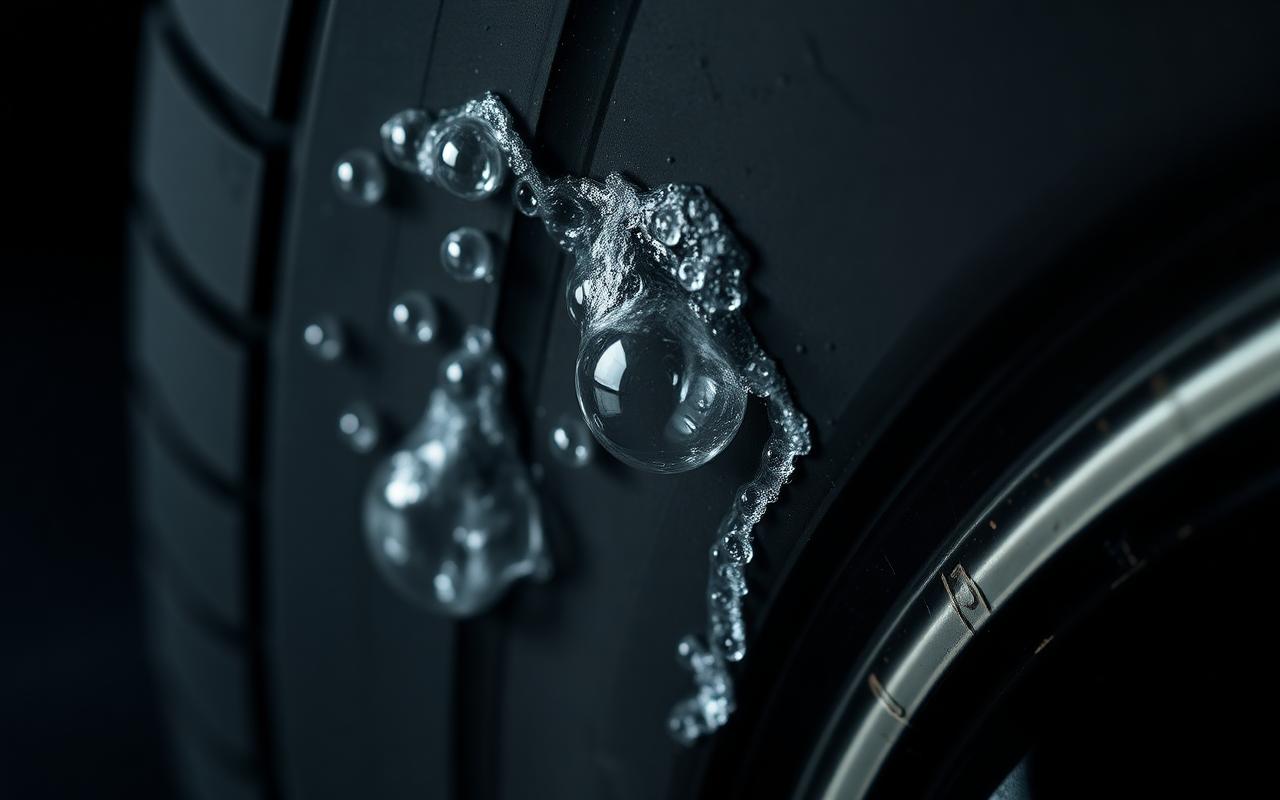
- Soap-and-water test: brush soapy water on the tyre and look for bubbles.
The 6 most common causes in London
1. Sharp debris (about 55% of cases)
Screws, nails, glass and metal road debris from constant utility roadworks. Central London streets are resurfaced more often than most UK cities, and offcuts get left behind. This is the most common cause we see.
2. Valve failure (about 15%)
Rubber valves perish after 5–7 years. A leaking valve mimics a puncture exactly. Fix: new valve, £5–£10.
3. Pothole damage to the rim seal (about 10%)
Hitting a pothole hard enough to bend the alloy can break the airtight seal between tyre and rim. Common on the A12, A40 and unrepaired residential streets in Hackney and Lambeth.
4. Corroded alloy seal (about 8%)
Salt from winter gritting corrodes the contact area where tyre meets alloy. Fix: bead seal — wheel off, clean, re-seat. £20–£40.
5. Faulty TPMS sensor (about 7%)
Sensors fail at 5–10 years. Will show a 'leak' that isn't real. Sensor replacement: £35–£90 depending on car.
6. Sidewall damage from kerbing (about 5%)
Parking too close to a kerb scrapes the sidewall, creating micro-tears that leak air slowly. Non-repairable — new tyre required.
Can a slow puncture be repaired?
In most cases (about 60% of slow punctures we see in London) — yes, under BS AU 159. The same rules apply as for any puncture:
- Damage must be in the central tread (more than 25mm from the sidewall edge).
- Hole must be less than 6mm wide.
- The tyre must not have been driven below 15 PSI.
What it costs to fix
If the damage is repairable: £30–£45 in London (see our full puncture repair cost guide). If it's the valve only: £5–£10. If it's the alloy seal or a TPMS sensor: £20–£90. If it's non-repairable: new tyre, £55–£200+ depending on size and brand.
Need a tyre fixed right now?
Mobile fitter to your London location in under 35 minutes.
Why slow punctures cause blowouts
An under-inflated tyre flexes more. More flex = more heat. At 70 mph on the M25, an under-inflated tyre can reach internal temperatures of 95–120°C — hot enough to delaminate the rubber from the steel belts. When that happens at speed, the tread separates and the tyre blows.
Slow puncture deaths in the UK are rare but real — the AA estimates 400+ tyre-related accidents annually involve previously-known slow leaks. It's the most preventable category of tyre failure.