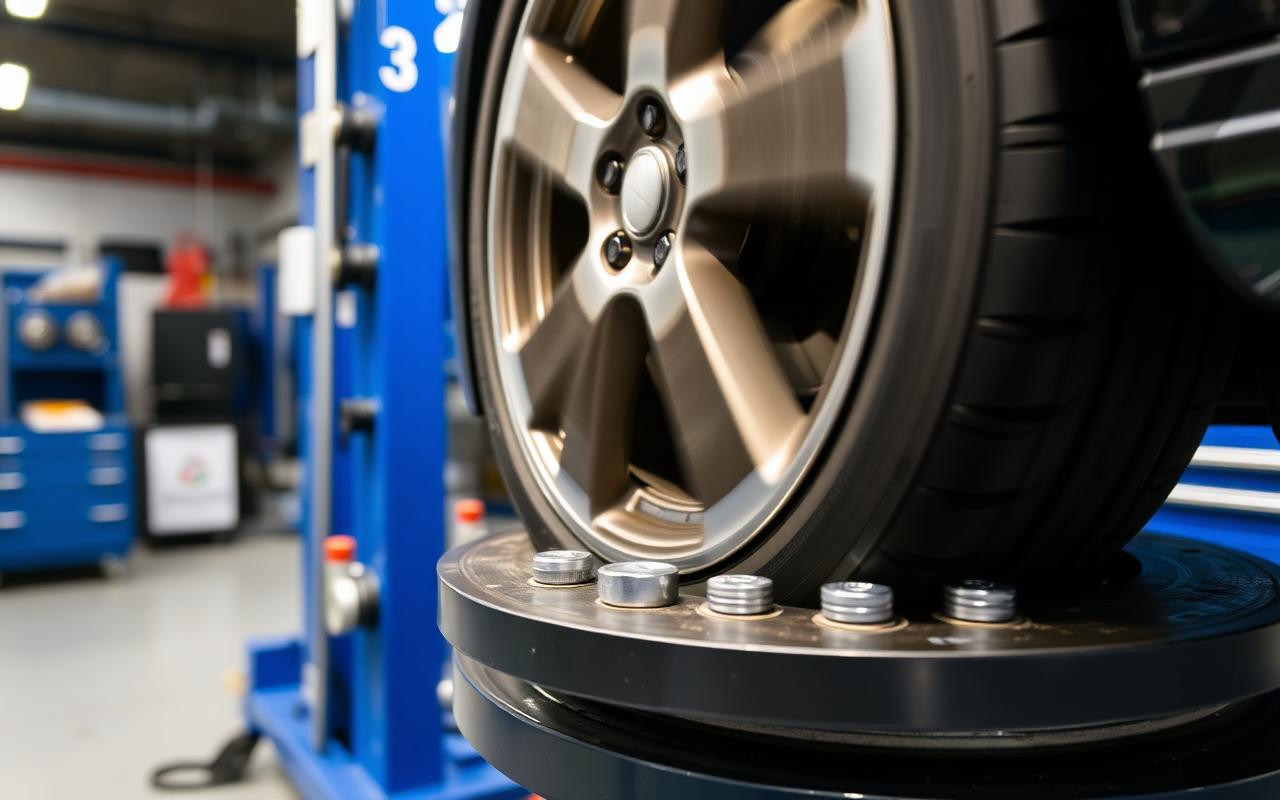
The 7 symptoms of an unbalanced wheel
1. Steering wheel vibration between 50–70 mph
Classic front-wheel imbalance symptom. The vibration appears in a narrow speed band — usually 55–65 mph — and disappears above and below it. You'll feel it through the steering wheel.
2. Seat or floor vibration at the same speeds
Same root cause but in a rear wheel. The vibration transmits through the suspension into the body. You'll feel it in the seat base or footwell.
3. Uneven 'cupping' wear on the tread
Look closely at the tread surface. Scalloped or wavy wear patterns (called 'cupping') are caused by tyres bouncing rather than rolling smoothly — a sign of long-term imbalance.
4. Premature shoulder wear
If the tread shoulder is wearing faster than the middle, that's often imbalance combined with under-inflation. Balance + correct PSI fixes it.
5. Steering pull on a smooth, straight road
Usually caused by tracking, but imbalance combined with worn suspension can mimic it. A balance check is the cheaper first diagnostic.
6. New vibration after a pothole
Hitting a deep pothole can throw off a balance weight or knock the wheel slightly out of round. Common in London — pothole damage caused 1 in 8 of all 2025 RAC callouts.
7. Vibration after a tyre change
If your car never vibrated and now does after a fitter changed a tyre, the wheel wasn't balanced after fitting (or was balanced incorrectly). Take it back — most reputable fitters re-balance free for 14 days.
What causes imbalance
- A balance weight has fallen off (clip-on weights on alloy lips are the worst offenders).
- A new tyre was fitted without balancing — or with poor balancing.
- A pothole or kerb impact has bent the wheel slightly.
- Heavy mud, snow or ice has packed into the wheel and not been cleared.
- The tyre has worn unevenly — sometimes balancing alone won't fully fix this; the tyre also needs rotation or replacement.
Cost of wheel balancing in London (2026)
- Mobile, single wheel: £15–£25.
- Mobile, full set of 4: £40–£60.
- Garage, single wheel: £8–£15.
- Garage, full set of 4: £25–£45.
- Included free with any new tyre fitting in most cases.
Wheel balancing vs wheel alignment — what's the difference?
These get confused constantly. They're different services:
- Balancing: corrects weight distribution around the wheel. Stops vibration. ~£10–£25 per wheel.
- Alignment (tracking): corrects the angle of the wheels relative to the road. Stops uneven wear and pulling. ~£40–£100 for a 4-wheel alignment.
If you're getting vibration: balance. If you're getting uneven wear or steering pull: alignment. Sometimes you need both.
How often should you balance?
- Always after fitting a new tyre.
- Every 5,000–7,000 miles if you do a lot of motorway driving.
- After any pothole impact that gives you a noticeable jolt.
- Any time you start to feel a vibration in the symptoms above.
Need a tyre fixed right now?
Mobile fitter to your London location in under 35 minutes.